Treatment Methods
The following methods can be applied individually or in combination, depending on symptoms. A spine consultation and MRI are required for an appropriate treatment plan.
Nerve Root Block
Under CT or fluoroscopic guidance, local anaesthetic and anti-inflammatory medication are delivered precisely to the affected nerve root.
Facet Joint Block
Targeted treatment of pain caused by facet joint degeneration (spondyloarthrosis) with steroid and anaesthetic injection.
Sacroiliac Joint Injection
Treatment of pain and inflammation caused by sacroiliac joint dysfunction with targeted injection therapy.
Infusion Therapy
Anti-inflammatory and analgesic infusion course with individualised composition depending on the source of pain.
Physiotherapy
Personalised exercise therapy: muscle relaxation, pain-reducing exercises, and strengthening of core spinal muscles.
CT-Guided Targeted Block
Targeted block injection is one of the most effective tools in the conservative management of spinal pain. There are two main types, depending on whether the nerve root or the facet joint is the source of symptoms.
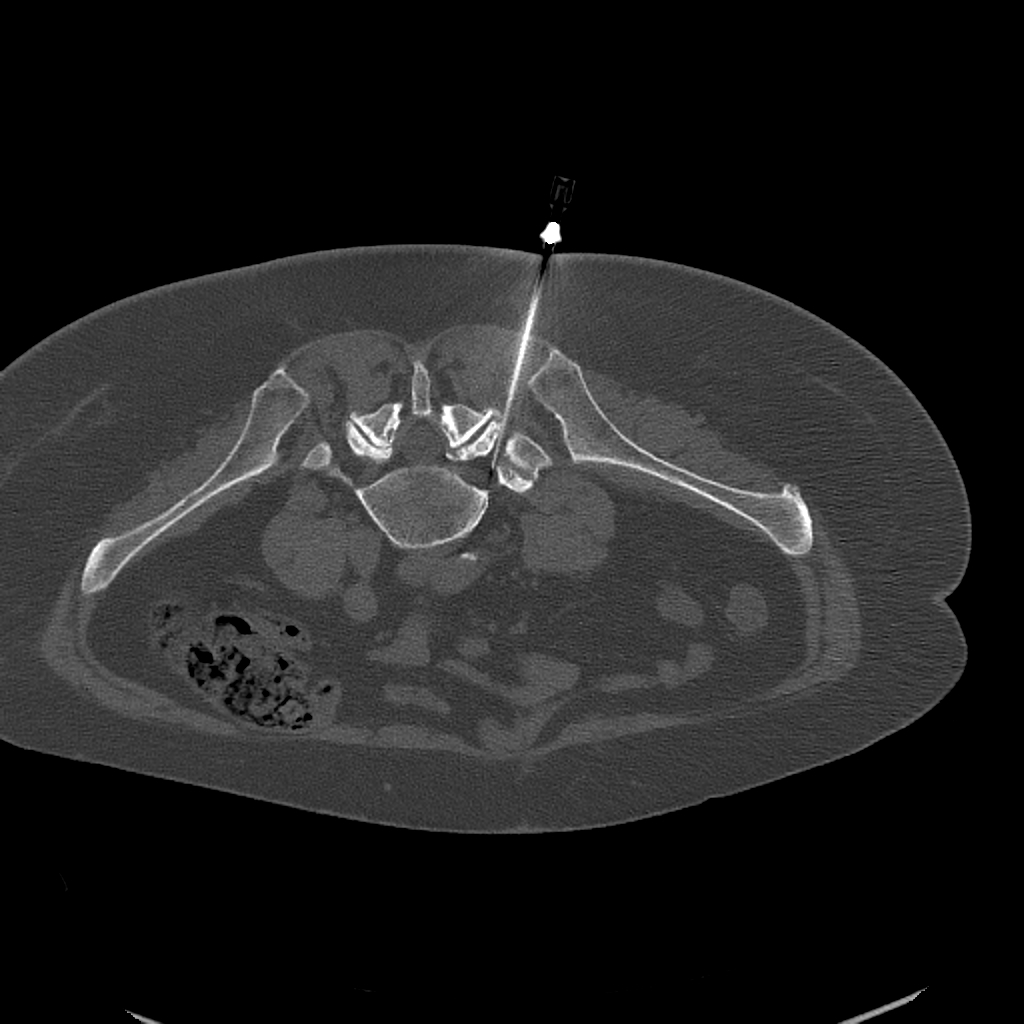
Nerve Root Block
When the exiting nerve root is the source of pain — for instance due to disc herniation or spinal stenosis — targeted nerve root block injection therapy is indicated. During the procedure, a minimal amount of local anaesthetic and anti-inflammatory steroid is delivered next to the affected nerve root.
Needle positioning is verified by CT or fluoroscopy to ensure only the inflamed nerves are treated. Temporary numbness or weakness may occur due to the anaesthetic — this is a normal phenomenon that typically resolves within a few hours.
Facet Joint Block
Increased loading of the facet joints accelerates cartilage degeneration (arthrosis), which can cause joint pain. In such cases, a small amount of local anaesthetic and anti-inflammatory steroid is injected into the affected joint, also under CT or fluoroscopic guidance.
Procedure
- Diagnosis confirmed by imaging (MRI) is required
- Needle position is verified by CT or fluoroscopy
- 30-minute observation is required after treatment
- If asymptomatic, the patient may leave unaccompanied
- Driving is not recommended on the day of treatment
Contraindications
- Hypersensitivity to any of the agents used
- Anticoagulant medication — requires increased caution
- Blood sugar or blood pressure medications — the treating physician must be informed
Treatment Process at Buda Health Center
Spine Surgery Consultation
Physical examination and evaluation of existing imaging (MRI, CT, X-ray). Additional studies ordered if necessary.
Diagnosis and Treatment Plan
Identification of the pain source and development of a personalised treatment plan: infusion, block, physiotherapy, or combination thereof.
Treatment
5-day conservative treatment course or single-day CT-guided block procedure — depending on the diagnosis and severity of symptoms.
Follow-up and Physiotherapy
Evaluation of treatment effectiveness and initiation of physiotherapy programme as needed for lasting results.
Treatments are available at Buda Health Center, ideally following an outpatient spine surgery consultation.
More information at bhc.hu