Scientific Background
During my PhD research, I established Hungary's first Primary Spinal Tumour Registry and developed the PSTMS prognostic scoring system. As a co-investigator of the AO Spine Knowledge Forum Tumors, I participated in international multicentre studies.
PSTMS
Primary Spinal Tumor Mortality Score — a prognostic tool that predicts post-surgical survival outcomes.
350+ Cases
Institutional Primary Spinal Tumor Registry — an internationally unique database given the rarity of these conditions.
AO Spine KFT
International research collaboration for advancing the treatment of spinal tumors.
Tumour Types Treated
Primary Spinal Tumours
Surgical treatment of chordoma, giant cell tumor (GCT), osteosarcoma, chondrosarcoma, and other rare primary bone tumors.
Sacral Tumours
Radical sacral resections — one of the highest case volumes in Hungary in this field.
Spinal Metastases
Multidisciplinary management of metastatic tumors in collaboration with oncologists, radiation therapists, and radiologists.
Tumour-like Lesions
Differential diagnosis and treatment of benign lesions as needed.
Surgical Approaches
En Bloc Resection
Removal of the tumor in one piece with clear surgical margins — the standard for radical treatment of primary spinal tumors. This technique maximises the chance of local control.
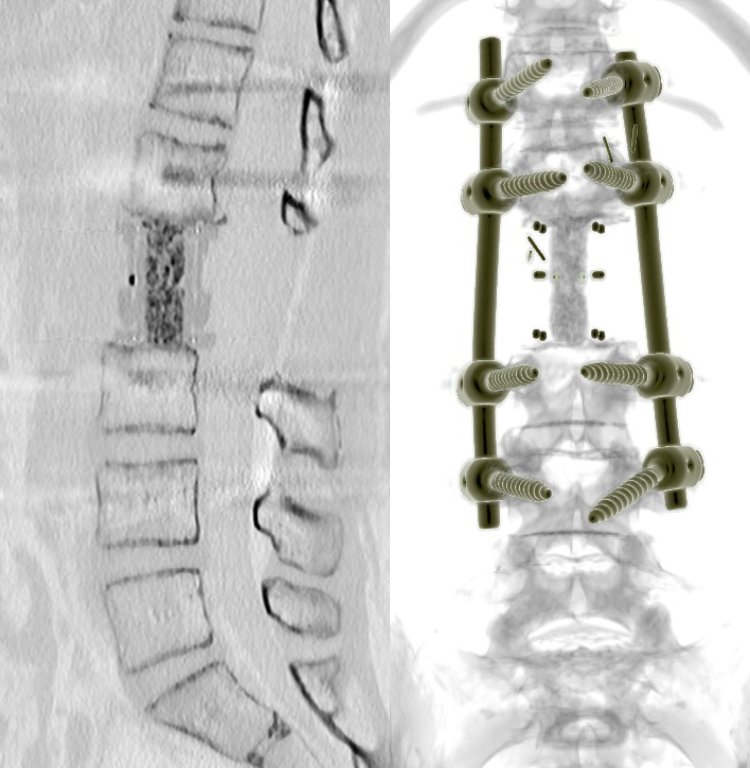
Complex Reconstructive Surgery
Restoration of spinal stability after tumor removal using titanium implants, cages, and bone graft. Combined surgery with abdominal or plastic surgeons when needed.
Minimally Invasive Solutions
For metastases and pain management: radiofrequency ablation, vertebroplasty, and percutaneous stabilisation to improve the patient's quality of life.
Multidisciplinary Approach
Spinal tumor care is teamwork. The treatment plan is developed with input from oncologists, radiation therapists, radiologists, pathologists, anaesthesiologists, and rehabilitation specialists. Decisions are always made on a case-by-case basis, following evidence-based guidelines.
To reduce septic complications, we developed protocols involving abdominal and plastic surgeons and vacuum-assisted wound management techniques, which significantly improved patients' postoperative outcomes.
Related Publications
The full publication list is available on Google Scholar profilon.
Back to home